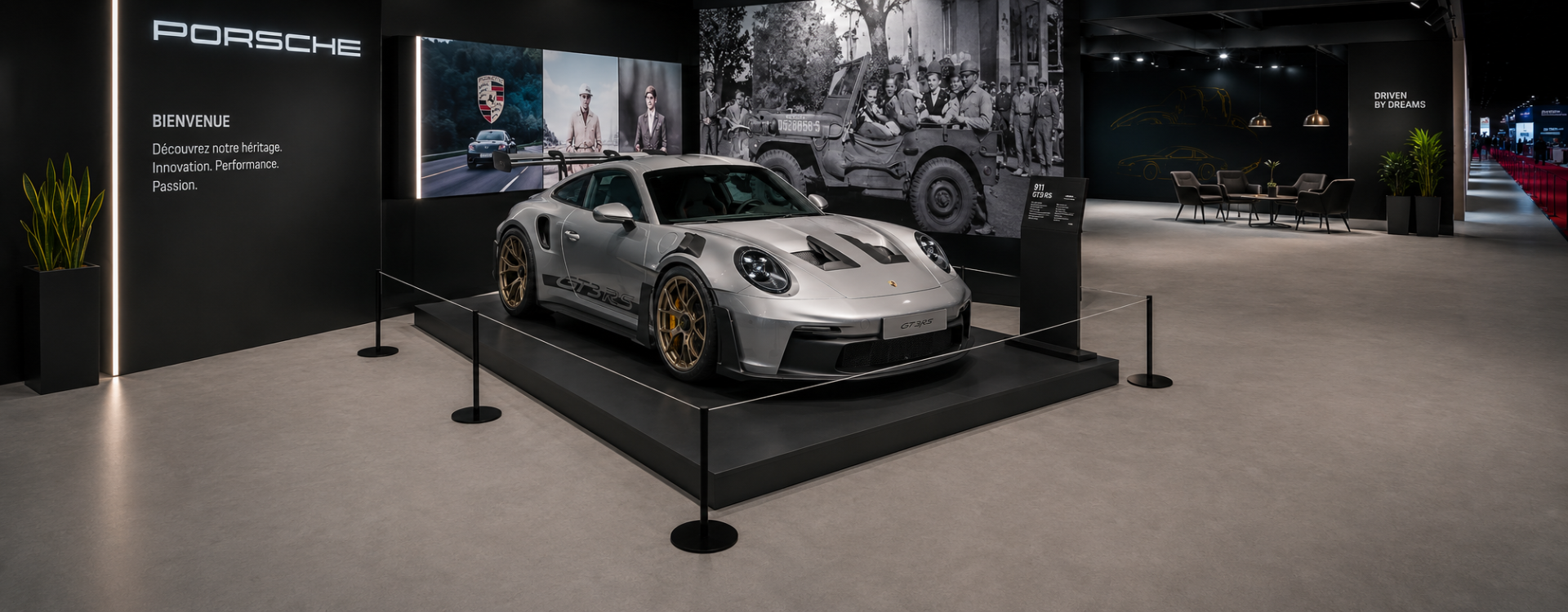
How to organise traffic flow on a professional stand?
A well-organised professional stand creates a seamless experience for your visitors. Discover the best practices in marking and signage to optimise traffic flow and maximise your business contacts.
Why is organising traffic flow crucial on a stand?
Traffic flow on a professional stand cannot be improvised. It is a strategic element of your presence at trade shows, business fairs or B2B events. Poor organisation can generate congestion, frustrate your visitors and significantly reduce the quality of business interactions.
The main objective is to create a natural and intuitive flow that guides visitors through the different areas of your stand. This not only allows you to welcome more prospects, but also optimises interaction time with each visitor and promotes better brand recall.
Did you know: Visitors spend an average of 3 to 5 minutes on a stand. Poorly organised traffic flow cuts this time in half, limiting your business opportunities.
Fundamental principles of stand marking
Create a welcoming and visible entrance
The entrance to your stand must be clearly identified and attractive. Use strong visual marking: signage, banner, or three-dimensional signage elements. This first impression is crucial in attracting visitors to your space.
Make sure to leave sufficient opening so that visitors don't hesitate to enter. A clear reception area of 1.5 to 2 metres wide is recommended. This avoids a "bottleneck" effect and facilitates access even during peak times.
Define distinct zones and logical routes
Divide your stand into thematic or functional zones: presentation area, demonstration area, consultation area, rest space. Each zone should be clearly marked by visual elements (colours, materials, different heights) or by floor marking.
The route should follow a narrative logic: introduction → discovery → engagement → conclusion. This naturally guides the visitor without forcing them, whilst maximising exposure to your products or services.
Use directional marking effectively
Directional arrows, signage panels and floor markings play a crucial role in orienting visitors. They must be sufficiently visible, consistent in their graphic style and easy to understand without unnecessary text.
Prefer discreet but effective marking. The aim is not to turn your stand into a maze, but to create a natural pathway that seems obvious to visitors. Signage elements should blend in with the overall atmosphere of your space.
Essential marking tools and equipment
Posts and barriers
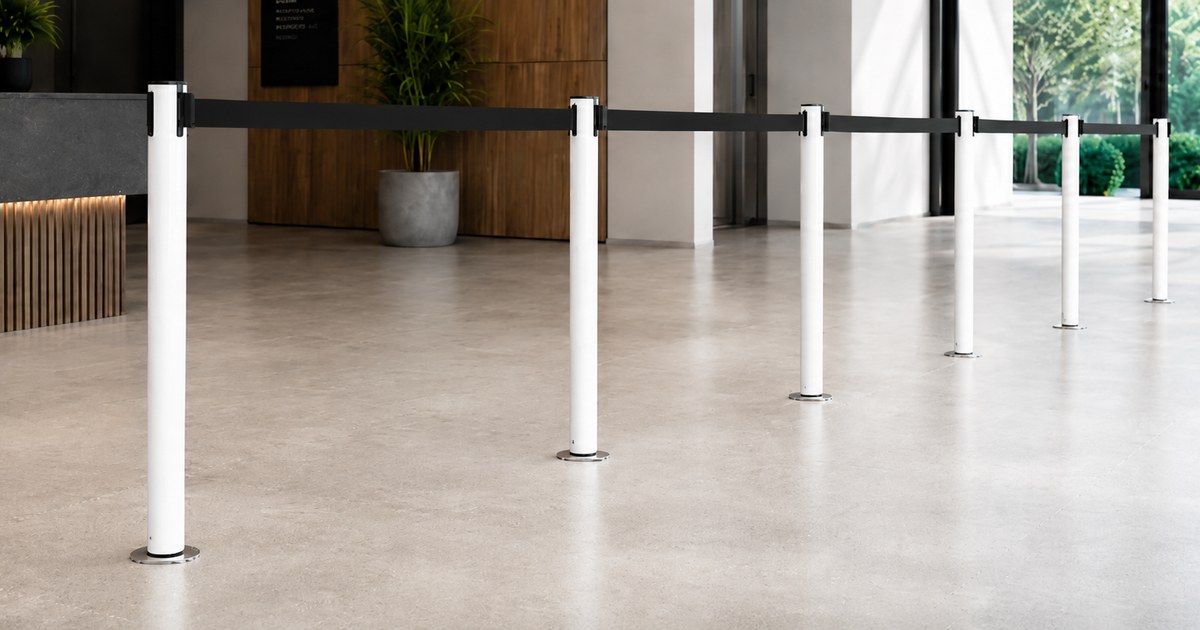
Delimit zones and create passages. Retractable belt posts offer flexibility and practicality.
Floor signage
Adhesive stickers, paint or marking tape guide traffic flow intuitively.
Directional signs
Arrows, pictograms and short text orient visitors to key areas.
Directional lighting
Highlight important areas and create visual points of interest.
Rest areas
Strategically placed seating and waiting areas allow visitors to rest.
Colour coding
Use distinct colours to differentiate zones and improve readability.
Practical strategies to optimise traffic flow
The loop model: the ideal flow
The loop layout is considered the optimal model for professional stands. It allows visitors to circulate naturally without retracing their steps, whilst discovering your entire offering.
With this system, visitors enter from one side, follow a circular route and exit from another point. This creates a natural and continuous flow, particularly effective during busy periods. For this layout, posts with retractable belts are perfect for marking zones without creating a permanent obstacle.
Adapt passage width
Passage width should be proportionate to the expected flow. For a small stand, 1.2 metres is sufficient. For a large stand welcoming many visitors, plan at least 1.5 to 2 metres to allow visitors to pass comfortably.
Passages that are too narrow create bottlenecks and frustrate visitors. Passages that are too wide dilute the visual impact of your stand and reduce the intimacy of business interactions.
Create rest and waiting areas
Incorporate rest or waiting spaces that are strategically placed. These areas allow visitors to rest, review documents or wait their turn for a demonstration. They also reduce the sense of overload during peak times.
These spaces should be clearly separated from the main traffic flow to avoid creating obstacles. A few chairs, a small table or a raised area can suffice.
Position your teams strategically
The positioning of your team directly influences traffic flow. Position greeters at the entrance to capture visitors. Place product experts at key points in the journey to naturally guide visitors through areas.
Avoid concentrating your entire team in one corner. Disperse your staff to create multiple interaction points and encourage visitors to explore the entire stand.
Common mistakes to avoid
An unwelcoming entrance: Visitors hesitate to enter a stand that appears closed or unappealing. Invest in clear and inviting welcome signage.
Passages that are too narrow: Create bottlenecks and frustrate your prospects. Always plan sufficient manoeuvrability.
An absence of marking: Visitors get lost and leave the stand prematurely. Use clear and consistent visual markings.
A confusing route: If the circulation logic is not obvious, visitors feel lost. Test your route before the show.
Too much visual information: An excess of signs, arrows and signage creates cognitive overload. Keep things minimal and effective.
Poorly positioned team: If all your staff are grouped together, certain areas of the stand remain empty. Position your team strategically.
Ignoring peak times: Adapt your marking to manage busy periods. Plan waiting areas and wider passages.
Measure and adjust your traffic flow effectiveness
Traffic organisation is not fixed. During the show, observe how visitors move around. Note congestion areas, ignored passages or points of confusion. These observations are invaluable for improving your stand for future events.
Key indicators to track: average time spent on the stand, number of visitors reaching each area, conversion rate to leads, and qualitative feedback from your sales team.
Tip: Take photos and videos of your stand in action. This will allow you to precisely analyse traffic flow and identify improvement points.
Conclusion: Smooth traffic flow, a high-performing stand
Organising traffic flow on a professional stand is far more than just aesthetics. It is a strategic element that directly impacts your business results. Smooth and intuitive traffic flow increases interaction time with visitors, improves their experience and facilitates conversion to qualified leads.
By applying fundamental marking principles, using the right equipment and testing your solutions, you will create a stand that naturally welcomes your visitors and maximises your return on investment. Remember that each show is a learning opportunity to refine your approach.
Optimise your stand marking today
Discover our complete range of posts and signage solutions to create smooth and professional traffic flow on your stand.




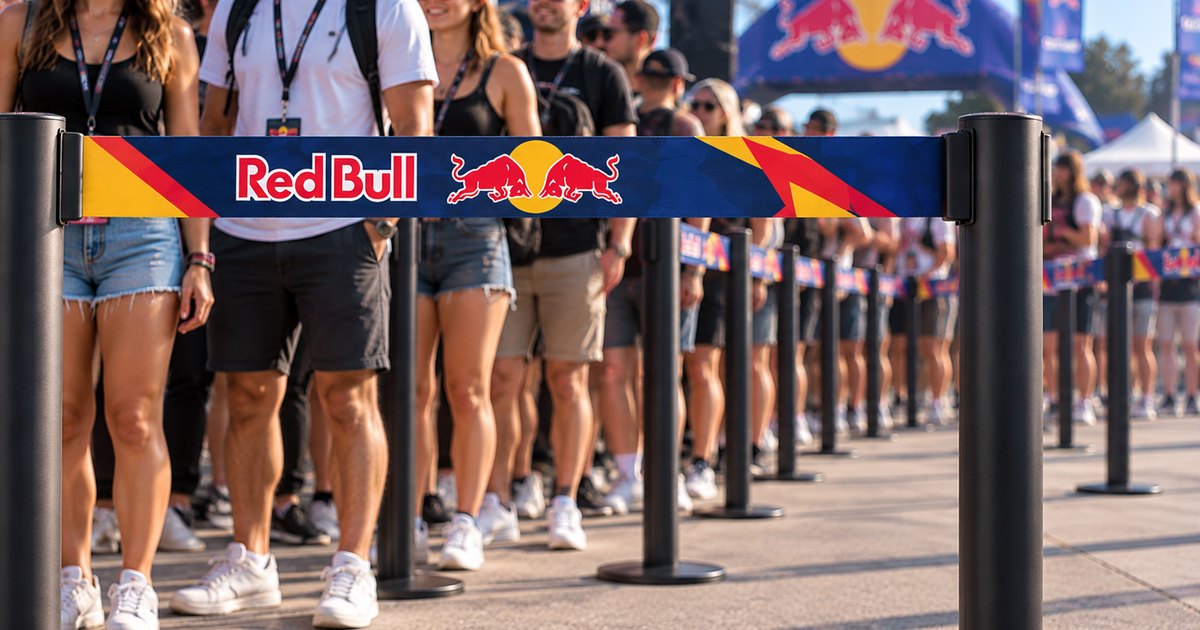 Tips & Advice Queue Sponsorship: Get Your Partners to Fund Your Barrier Posts Stadiums, trade shows, museums, airports, shopping centres: the belt on your barrier posts is advertising space that…
 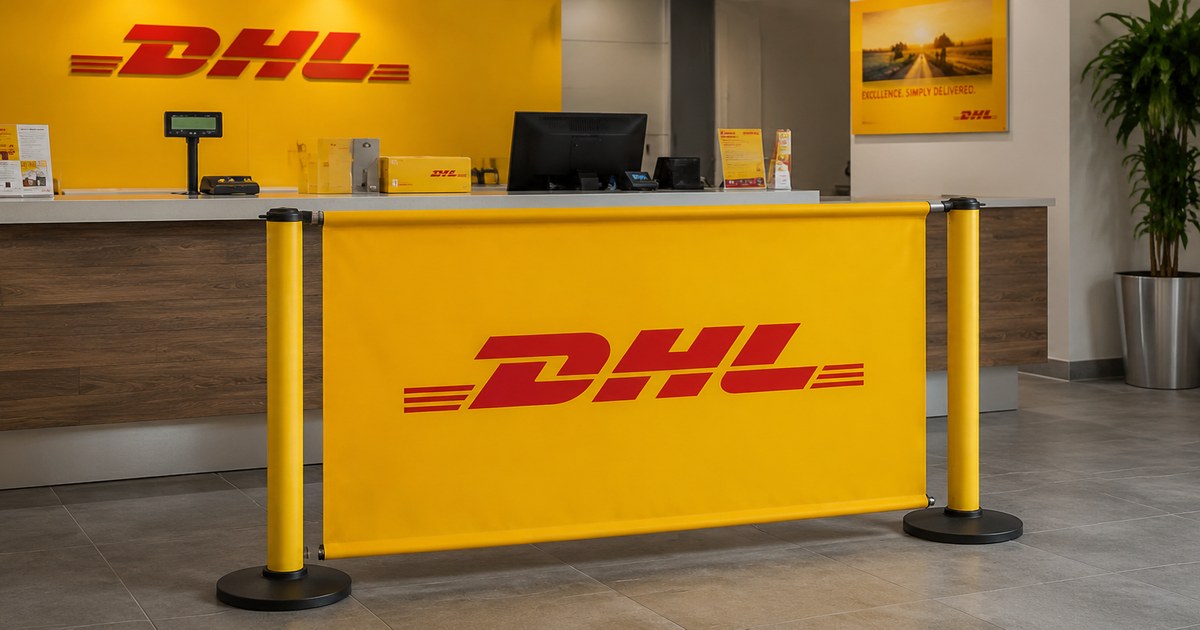 Tips & Advice Custom printed barriers: divide your space and show your brand A free-standing barrier with a banner in your colours: divide and communicate in a single move. Uses, personalisation…
  Our ranges in detail Which base for your barrier post? The 6 bases compared Weighted, magnetic, stackable, fixed or removable: the comparison of the 6 barrier post bases.
  Tips & Advice Removable socketed barrier post: fixed anchoring, mobile freedom A recessed, discreet anchor you remove at will to free the floor: all about the removable socketed barrier post.
  Tips & Advice Strap End: What is the Purpose of Each Finishing Type for Guidance Posts? Standard, security, magnetic or anti-panic: discover the purpose of each strap end for crowd control posts and why…
  Tips & Advice Post Cap with Strap: Standard, White Label or Customised? Standard, white label or bespoke: the three cap finishes for Potelet® strap posts and how to choose yours.
  Tips & Advice For personalising the straps on your crowd control posts, insist on textile sublimation! Explanation. Personalise your crowd control post straps with textile sublimation for a professional and durable finish!
 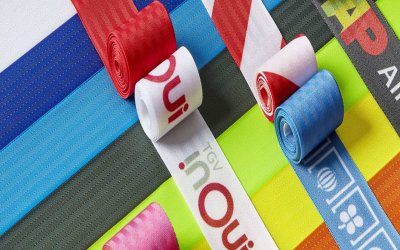 Customisation How to personalise your post strap? Complete configurator guide Discover how to create your personalised strap in 7 steps: RAL colour, HD logo, front/back printing. Our free online configurator for your…