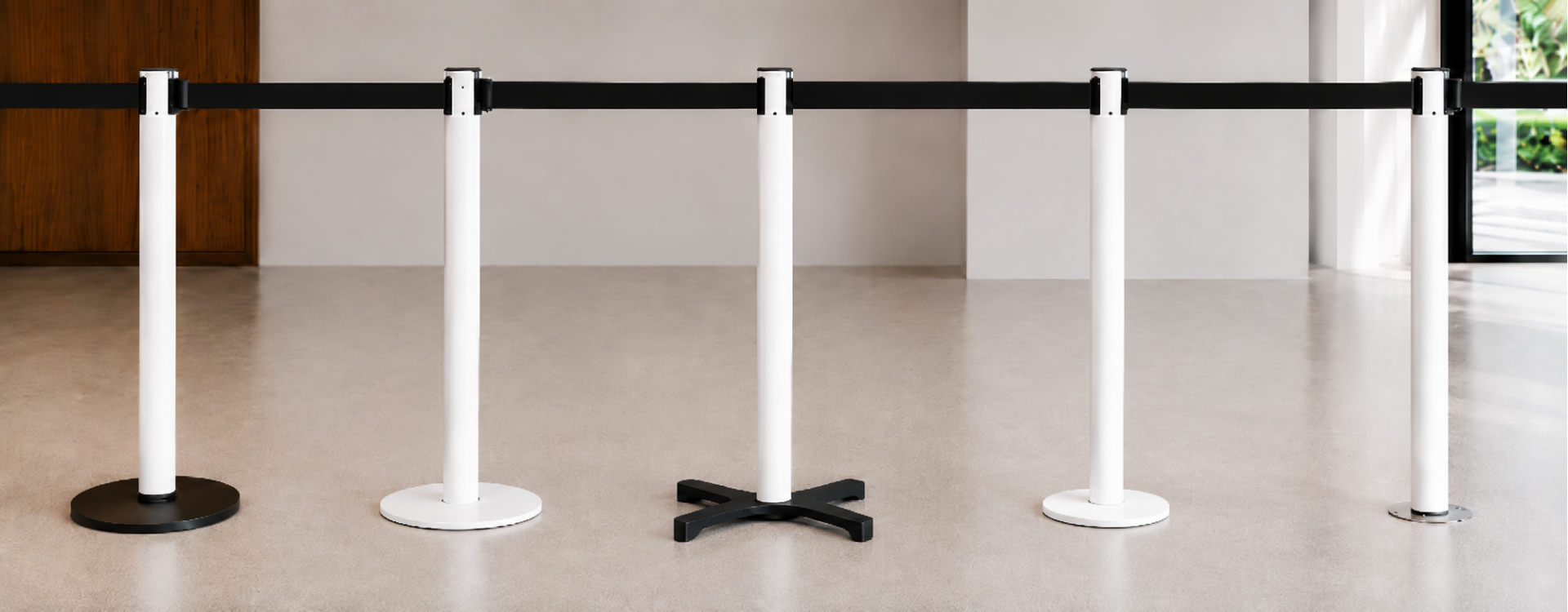
Buying guideWhich base for your barrier post? The 6 bases compared
You choose a post for its belt or height, but it is the base that decides its stability, discretion, mobility and the floors you can install it on. An overview of the six bases and their right use.
Two posts that look identical can behave very differently depending on their base. The base is the part you look at least and yet weighs most in the final result: floor hold, footprint, ease of moving, floor protection, looks. Before ordering a retractable belt barrier, it is worth choosing the base knowingly. Here are the six families, each with its own logic.
Classic weighted base
Extra-thin steel base, stable and movable. The versatile default.
Ecological base
Same format, in recycled plastic and lighter. The economical, durable option.
Magnetic base
Strong magnets to fix the post on a metal surface, without drilling.
Stackable base
Bases that interlock, for long repeated queues.
Fixed base
Screwed to the floor, with a screw cover. Permanent and discreet.
Removable base
Recessed but removable, with a flush cap. Fixed and reversible at once.
The mobile bases: classic weighted and ecological
The classic weighted base is the reference: an extra-thin, heavy and stable steel disc with rubber pads that protect the floor. You set it down, move it, store it. It is the versatile choice for any installation that must stay flexible. It comes in stainless steel or painted, to match the setting, and carries among others the customisable posts.
The ecological base keeps the same extra-thin format, but is made from recycled polypropylene. Lighter to handle and cheaper, it targets installations that want to cut their carbon footprint without giving up stability. Like the previous one, it moves freely and protects the floor from below. It is the base of the posts in the economy range.
The magnetic base: anchoring on metal without drilling
The magnetic base holds three encapsulated neodymium magnets, for a holding force of around 150 kg. Placed on a metal surface, it fixes the post instantly, with no drilling or screws. For non-metallic surfaces, it comes with a ferritic steel disc and its adhesive film, which creates the anchor point. The ideal solution on steel floors and structures is a magnetic barrier post that damages nothing.
The stackable base: for long repeated queues
The stackable base stands out for its ability to interlock with its neighbours. In cast iron, sturdy and flat, it is meant for repeated post lines over long distances, where connecting the bases creates a regular grid. Rubber pins protect the floor, and the finish withstands heavy traffic. That is the logic of the stackable posts.
The recessed bases: fixed and removable
The fixed base is screwed straight into the floor. A top cover hides the screws, for a clean, permanent finish. It is the base of final installations, where discretion matters and the post is not meant to move: the fixed barrier post range.
The removable base shares this clean anchoring, but allows the post to be taken out at will. After drilling, a small aluminium socket is set into the floor; the tube slots in and comes out freely, and a flat cap fills the hole when the post is gone. You get a fixed, flush location that you can still erase as soon as you want to free the floor. That is the logic of the removable socketed posts.
Which base for which need?
| Base | Main strength | Ideal for |
|---|
| Classic weighted | Versatility, stability | Queues reconfigured daily |
| Ecological | Light, recycled materials | Economical mobile setups |
| Magnetic | Fixing without drilling | Metal surfaces and floors |
| Stackable | Interlocking bases | Long repeated queues |
| Fixed | Permanence, discretion | Final installations |
| Removable | Recessed but removable | Floor freed as needed |
Frequently asked questions
Can you change the base of an existing post?
Our posts are designed to be compatible with every base in the collection. The tube and the base are two separate parts, so you can match the anchoring to the use without changing the whole post. The choice is made at configuration, according to the floor and the mounting method you want.
Which base protects the floor best?
The mobile bases, classic weighted and ecological, have rubber pads underneath, precisely to avoid marking the floor when moved. The stackable bases are also protected. For the most delicate surfaces, a padded base is therefore preferable to a drilled anchor.
Do you have to drill for a magnetic base?
No. On an already metallic surface, the magnets are enough. On a non-metallic surface, you stick the supplied ferritic steel disc once, which acts as the anchor point: no drilling needed. The base then stays movable by lifting the post off its disc.
Is a heavy base always more stable?
Weight matters, but so does distribution. A well-designed base lowers the centre of gravity of the whole unit, giving good stability without being excessively heavy. The right measure is not raw weight, but the balance between base, post height and belt or rope tension.
In short
The base is not a detail: it decides whether your post stays mobile, is fixed for good, clings to metal or disappears when you no longer need it. Start from your main constraint (move, fix, avoid drilling, free the floor) and the right base becomes obvious.
Find the post and base for your spaces
Every range offers its bases: mobile, magnetic, fixed or removable.
See the retractable belt barriers



 Tips & Advice Custom printed barriers: divide your space and show your brand A free-standing barrier with a banner in your colours: divide and communicate in a single move. Uses, personalisation…
  Our ranges in detail Which base for your barrier post? The 6 bases compared Weighted, magnetic, stackable, fixed or removable: the comparison of the 6 barrier post bases.
  Tips & Advice Removable socketed barrier post: fixed anchoring, mobile freedom A recessed, discreet anchor you remove at will to free the floor: all about the removable socketed barrier post.
 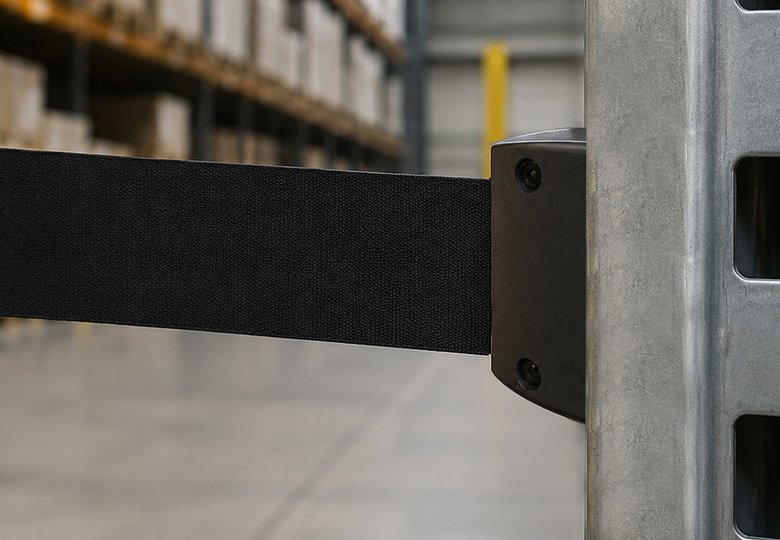 Tips & Advice Strap End: What is the Purpose of Each Finishing Type for Guidance Posts? Standard, security, magnetic or anti-panic: discover the purpose of each strap end for crowd control posts and why…
 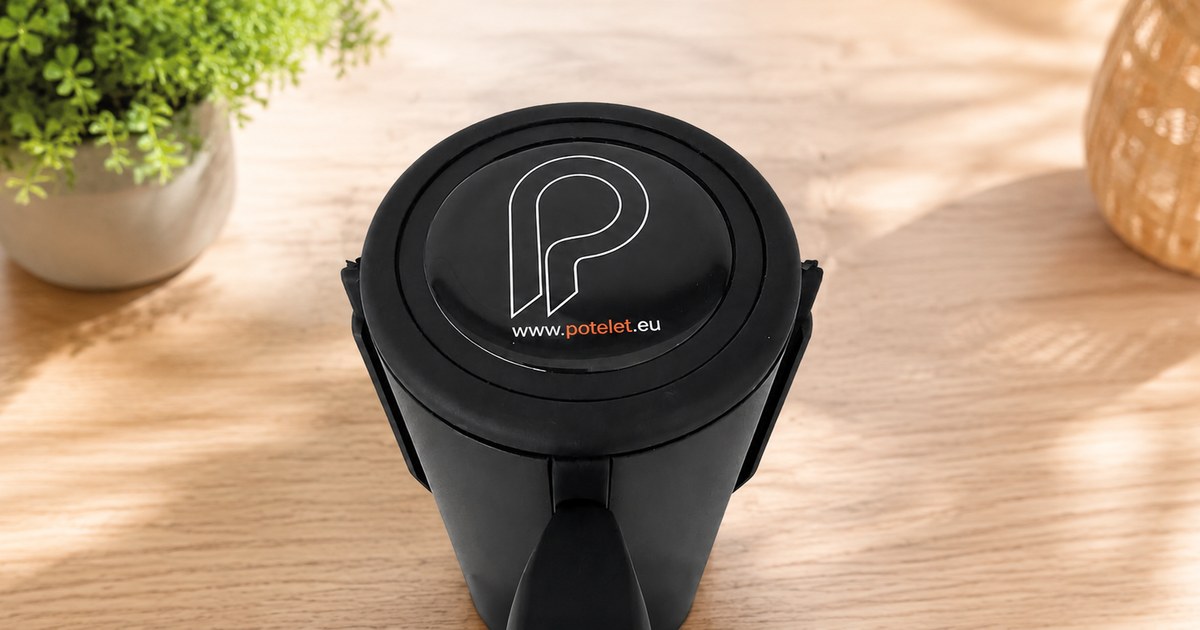 Tips & Advice Post Cap with Strap: Standard, White Label or Customised? Standard, white label or bespoke: the three cap finishes for Potelet® strap posts and how to choose yours.
 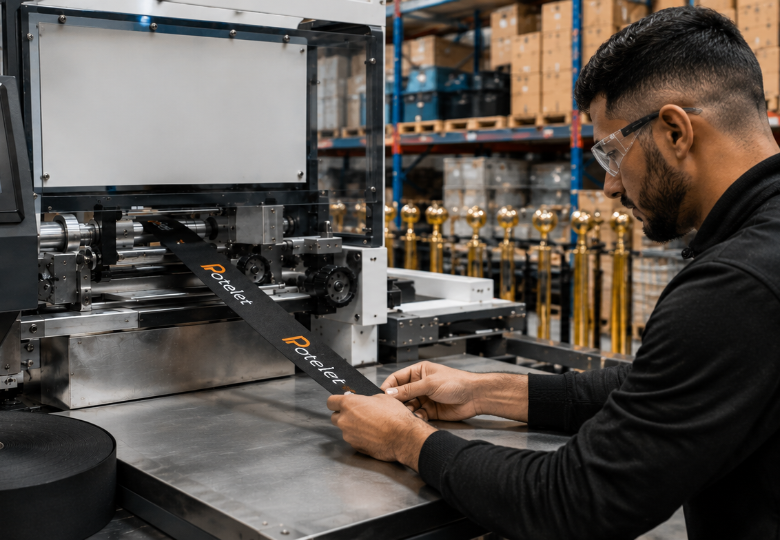 Tips & Advice For personalising the straps on your crowd control posts, insist on textile sublimation! Explanation. Personalise your crowd control post straps with textile sublimation for a professional and durable finish!
  Customisation How to personalise your post strap? Complete configurator guide Discover how to create your personalised strap in 7 steps: RAL colour, HD logo, front/back printing. Our free online configurator for your…