Flow ManagementPharmacy: How to Streamline Patient Waiting Times?
Queues in pharmacies directly impact patient satisfaction and staff efficiency. Discover practical solutions to reduce waiting times and improve the customer experience.
Queues in community pharmacies are a daily reality. Whether caused by high footfall, complex administrative processes or insufficient organisation, they create frustration among patients and increase stress for staff. Yet, in a sector where service quality is essential, optimising flow management becomes a major strategic issue for pharmacy managers.
This article explores best practices and innovative solutions to streamline queues in pharmacies, improve the patient journey and transform this constraint into a differentiation opportunity.
Why queues in pharmacies are problematic
Queues are more than just a minor inconvenience. They represent a genuine challenge for modern pharmacies, both operationally and relationally.
Impact on customer satisfaction
A patient waiting longer than 10 minutes already begins to express dissatisfaction. Beyond 20 minutes, the satisfaction rate drops dramatically. This prolonged wait affects the overall perception of the pharmacy, even if the pharmaceutical service itself is of high quality. Patients are increasingly demanding regarding waiting times, particularly when they are ill or in urgent situations.
Staff stress and productivity
A lengthy queue creates psychological pressure on pharmacists and pharmacy technicians. This work overload increases the risk of errors, reduces the quality of advice provided and generates professional burnout. Staff must work faster, often at the expense of the quality of interaction with each patient.
Loss of potential revenue
Patients who abandon the queue represent lost sales. Moreover, a poor experience drives customers to seek another pharmacy, directly impacting revenue and customer loyalty.
Key takeaway: A poorly managed queue creates a negative domino effect: customer dissatisfaction, staff stress, potential errors and lost revenue.
Analyse the causes of queues in pharmacies
Before implementing solutions, it is essential to understand the specific causes of queues in your pharmacy. Each pharmacy has its own unique context.
Main causes
- Predictable peaks in attendance: Certain times (midday, late afternoon) or certain days (Mondays, weekends) concentrate more patients.
- Slow administrative processes: Prescription verification, social security management, reimbursements, extended consultations.
- Lack of staff: Insufficient personnel during peak hours or uncompensated absences.
- Poor spatial organisation: Inadequate counter layout, poorly defined queues, inefficient payment zones.
- Slow IT systems: Obsolete or poorly optimised management software slowing down prescription processing.
- Lack of communication: Patients don't know how long they will wait, which increases their perception of the delay.
Diagnosis: questions to ask yourself
For an effective analysis, ask yourself these questions:
- At what times are the queues longest?
- What is the average waiting time actually experienced versus how patients perceive it?
- What types of prescriptions take the longest to process?
- Does staff have adequate IT tools?
- Does the layout of the premises facilitate flow?
Organisational solutions to reduce queues
Not all solutions are technological. Often, the best improvements come from better organisation and optimisation of existing processes.
Adapt schedules and staffing levels
Analyse your attendance data to identify peaks. Increase staffing during these critical periods. This may mean staggering staff breaks or recruiting additional pharmacy technicians during busy hours. A simple adjustment to working hours can reduce queues by 30 to 40%.
Optimise physical layout
Spatial organisation plays a crucial role. Ensure that:
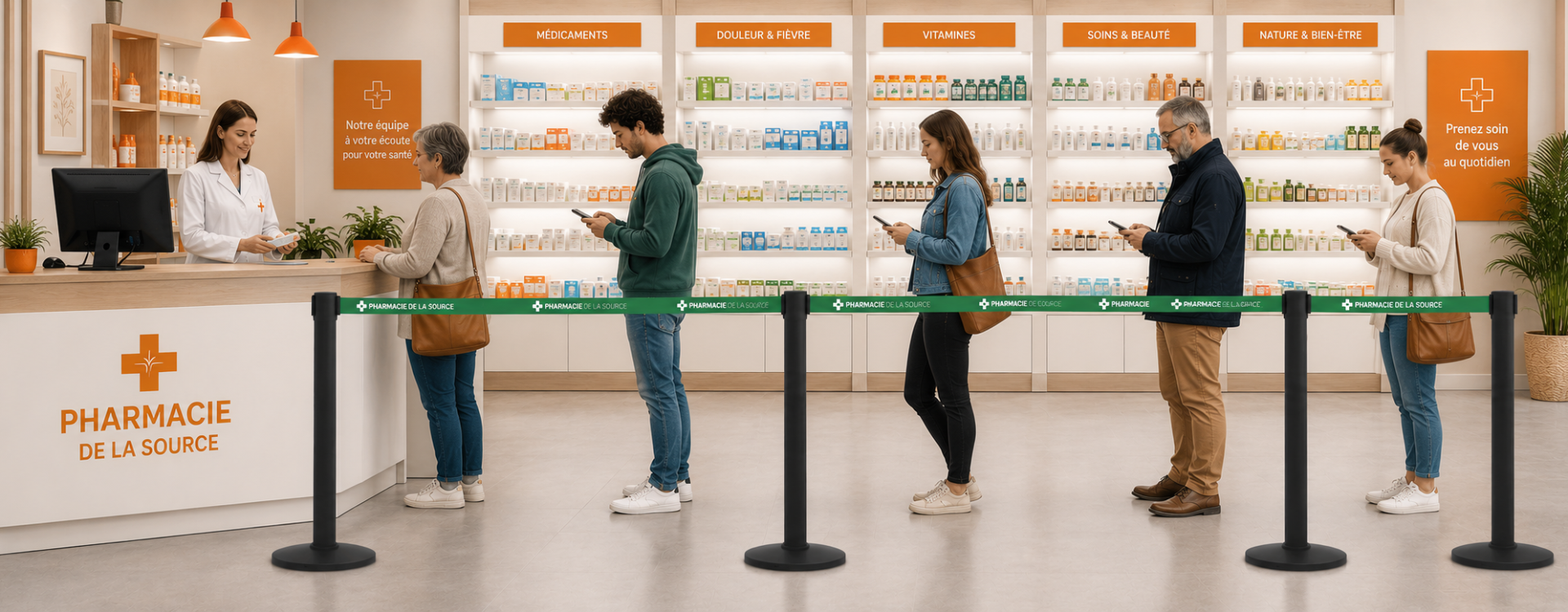
- Queues are clearly defined and visible
- Patients know where to position themselves
- Payment areas are separated from consultation areas
- There are multiple service points (several active counters)
- Circulation is logical and without congestion
The use of retractable queue barriers can also improve visual organisation and channel flows. Solutions such as retractable belt posts allow you to create flexible and professional queues while optimising available space.
Simplify administrative processes
Reduce unnecessary administrative steps. Automate what can be automated (prescription verification, reimbursements). Train your staff in standardised and efficient processes. Every minute saved per prescription multiplies quickly when processing dozens of patients per day.
Implement a priority queue system
Distinguish between simple prescriptions (refills) and complex prescriptions (advice, drug interactions). Create separate queues or express zones for quick refills. This allows patients with simple requests not to be slowed down by complex cases.
Practical tip: An express queue system for refill prescriptions can reduce waiting time by 50% for these patients.
Technological and digital innovations
Technology offers modern solutions to significantly improve queue management.
Electronic queue management systems
Electronic ticket systems allow patients to know their position in the queue and estimated waiting time. This considerably reduces stress and anxiety. These systems also provide valuable data on patient flows and bottlenecks.
E-prescriptions and pre-registration
Encourage your patients to send their prescriptions electronically or pre-register before their visit. This allows staff to prepare medicines before the patient arrives, drastically reducing counter waiting time. This is particularly effective for refill prescriptions.
Mobile application and notifications
A mobile app allowing patients to check waiting times in real-time improves their experience. They can decide to come back later if the queue is too long, which balances flows. SMS or push notifications inform the patient when their prescription is ready.
Optimised management software
Ensure that your pharmacy management software is up-to-date and optimised. A slow system slows down the entire process. Invest in modern cloud solutions that allow better integration with health systems and faster traceability.
Improve perceived waiting time
Often overlooked: perceived time is not actual time. Patients waiting without anything to do find time passes more slowly. Several tactics can improve their perception.
Transparent communication
Regularly inform patients of estimated waiting time. "You will be served in approximately 10 minutes" reassures much more than uncertainty. This transparency reduces stress and improves satisfaction even if the actual delay is identical.
Create a pleasant environment
A comfortable waiting area, well-lit, with sufficient seating and a pleasant temperature makes waiting less burdensome. Add informative content (health leaflets, information screens) or entertainment (soft music) to occupy patients' minds.
Staff engagement
Friendly and courteous staff who acknowledge the patient's wait significantly improves their perception. A simple "Thank you for your patience, we will serve you shortly" humanises the experience and creates a positive relationship.
Clear display
Display estimated waiting time on a visible screen at the entrance.
Informative content
Provide leaflets or health advice to read while waiting.
Comfortable space
Invest in ergonomic seating and good air conditioning.
Acknowledgement
Staff greets waiting customers and thanks them for their patience.
Measure and monitor improvements
To know whether your efforts are working, you must measure. Establish key performance indicators (KPIs) to track the impact of your changes.
Indicators to track
- Average waiting time: Measure the delay between arrival and service.
- Average service time: Duration of processing each prescription.
- Maximum queue length: Number of patients waiting simultaneously.
- Customer satisfaction rate: Regular surveys or polls.
- Abandonment rate: Patients who leave without being served.
- Patient volume processed: Number of transactions per hour/day.
Measurement tools
Use your management software to extract this data automatically. Camera or sensor systems can also track customer flows. Regular satisfaction surveys (paper or digital) provide valuable qualitative feedback on the perceived experience.
Set realistic objectives: reduce average waiting time by 25% in 6 months, for example. Monitor your progress regularly and adjust your strategies based on results.
Engage and train your team
No solution will work without your staff's buy-in. Pharmacists and technicians are on the front line and understand the problems better than anyone.
Communication and involvement
Explain why you're implementing these changes. Involve your team in diagnosing problems and designing solutions. Technicians can offer valuable improvements based on their daily experience. An involved team is a motivated team.
Continuous training
Train your staff regularly on new processes, tools and best practices. Initial training is not enough; regular reminders maintain standards. Invest in your team's professional development, this also improves their job satisfaction.
Recognition and motivation
Recognise your team's efforts. Celebrate improvements, even minor ones. Motivated staff work more efficiently and deliver better service, creating a virtuous circle.
Key point: Improving queues is a collective project. Without team involvement, technological solutions alone will not be sufficient.
Conclusion: towards a more fluid and welcoming pharmacy
Streamlining queues in pharmacies is not a matter of luck or inevitability. It is the result of a methodical approach combining analysis, organisation, technology and human commitment.
The best pharmacies are not necessarily those with the most customers, but those who manage their flows effectively. By reducing waiting times, you directly improve:
- Your patients' satisfaction and loyalty
- Your staff's wellbeing and productivity
- The quality of pharmaceutical advice provided
- Your reputation and competitiveness
- Your financial results
Start with a precise diagnosis, then progressively implement solutions adapted to your context. Your pharmacy's physical organisation, including effective queue management with tools such as retractable belt posts, plays an important role in this fluidity. Measure your progress and continuously adjust. Within six months, you will see a significant transformation of your pharmacy.
Queues will never completely disappear, but they can become manageable, acceptable, and even imperceptible to your patients. This is the objective to pursue.
Optimise your pharmacy's organisation now
Effective queue management starts with professional and efficient layout. Discover how our delimitation solutions can transform your patients' experience.
Discover our queue management solutions



 Tips & Advice Queue Sponsorship: Get Your Partners to Fund Your Barrier Posts Stadiums, trade shows, museums, airports, shopping centres: the belt on your barrier posts is advertising space that…
 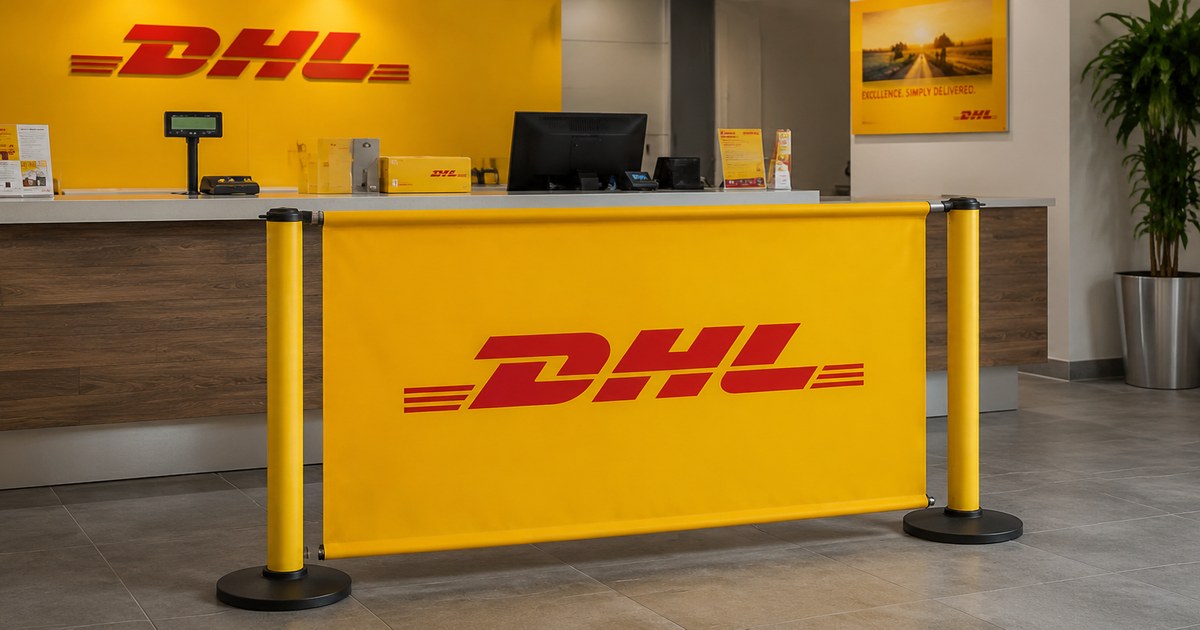 Tips & Advice Custom printed barriers: divide your space and show your brand A free-standing barrier with a banner in your colours: divide and communicate in a single move. Uses, personalisation…
  Our ranges in detail Which base for your barrier post? The 6 bases compared Weighted, magnetic, stackable, fixed or removable: the comparison of the 6 barrier post bases.
 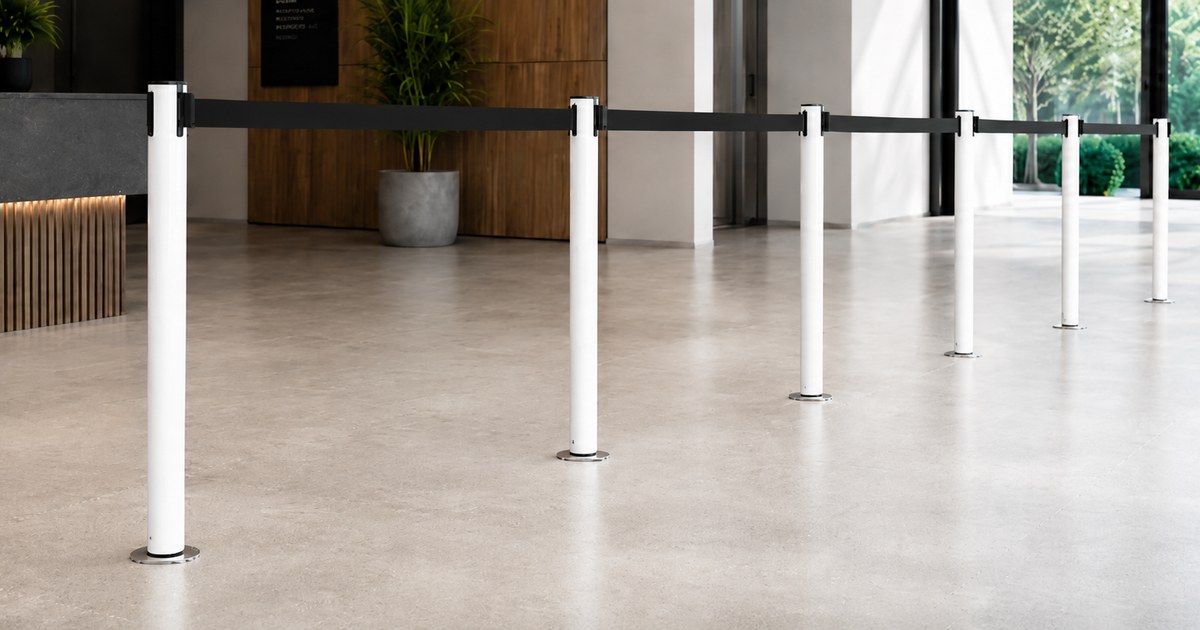 Tips & Advice Removable socketed barrier post: fixed anchoring, mobile freedom A recessed, discreet anchor you remove at will to free the floor: all about the removable socketed barrier post.
 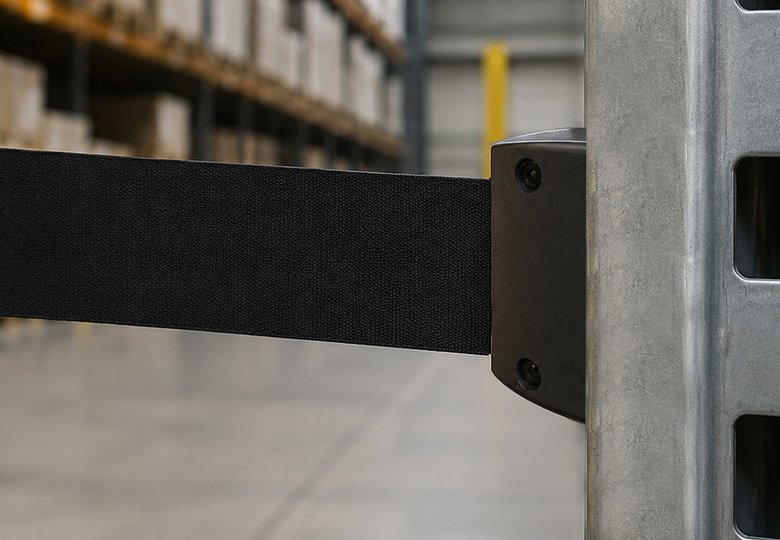 Tips & Advice Strap End: What is the Purpose of Each Finishing Type for Guidance Posts? Standard, security, magnetic or anti-panic: discover the purpose of each strap end for crowd control posts and why…
 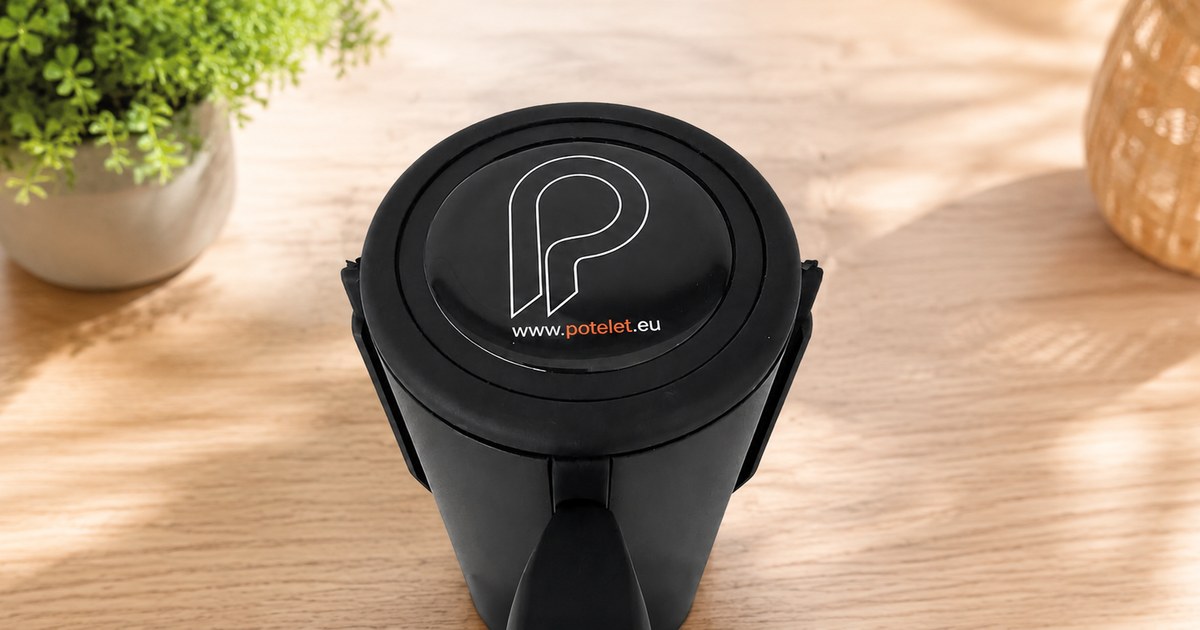 Tips & Advice Post Cap with Strap: Standard, White Label or Customised? Standard, white label or bespoke: the three cap finishes for Potelet® strap posts and how to choose yours.
 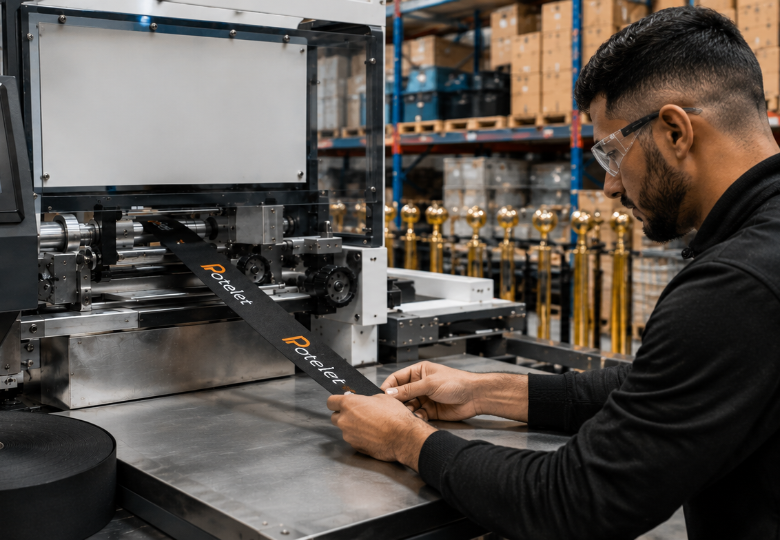 Tips & Advice For personalising the straps on your crowd control posts, insist on textile sublimation! Explanation. Personalise your crowd control post straps with textile sublimation for a professional and durable finish!
  Customisation How to personalise your post strap? Complete configurator guide Discover how to create your personalised strap in 7 steps: RAL colour, HD logo, front/back printing. Our free online configurator for your…