Queue management in public buildings: obligations and guidance solutions
Any public building or venue (PBV) - shops, public offices, museums, hospitals, entertainment venues - is subject to precise regulations concerning safety, accessibility and flow management. A queue guidance system helps organise reception, provided these rules are respected.
What is a public building or venue?
A PBV is any location open to the public, whether free or paid access. In France, these buildings (known as ERP) are classified into several categories (1 to 5) according to their capacity, and each category is subject to specific safety rules concerning in particular:
- Exits and evacuation routes
- Accessibility for people with reduced mobility
- Safety signage
- Flow organisation in case of high attendance
Obligations related to queues in public buildings
In public buildings, queue management must imperatively comply with certain constraints:
Accessibility for people with reduced mobility
A queue must not deprive wheelchair users or people with reduced mobility of the accessible route. In France, that route must keep 1.40 m clear in a new building and 1.20 m in an existing one (French arrêtés of 20 April 2017 and 8 December 2014); a narrower width is only allowed at isolated points. Other countries have their own rules. Also avoid tight angles in zigzag configurations. Find out more in our guide to choosing the right barrier rope.
Exits and evacuation
Guidance systems must never block escape routes or emergency exits. In France, no projection or storage may reduce the regulatory width of escape routes (article CO 37), and movable furniture has no place there, except in a widening forming a waiting area. So do not count on removing the posts at the moment of an evacuation: plan a layout that keeps these routes clear at all times.
Safety of people
Guidance equipment installed in a public building must not present any risk of injury: no sharp edges, stable bases, straps in good condition.
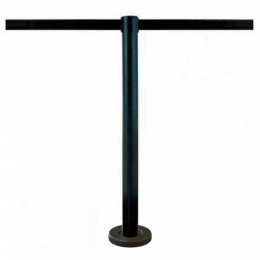
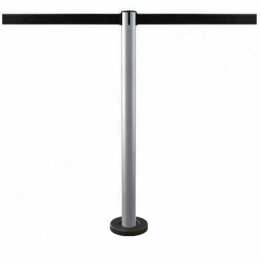
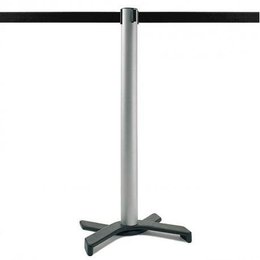
Why have public buildings massively adopted retractable strap posts?
In the majority of public buildings, retractable strap posts have become the reference solution for several reasons:
- Flexibility: configurations can be modified in a few minutes
- Easy clearing: posts are easily removed outside busy periods
- Robustness: professional models withstand intensive use
- Safety: heavy and stable bases, strap locking mechanisms
- Accessibility: the layout can be planned to keep the required passage width clear
What types of public buildings need guidance?
| Type of venue | Specific needs |
|---|
| Shops and large retailers | Checkout queues, customer reception |
| Public offices and banks | Counter queues |
| Museums and cultural sites | Access control, artwork protection |
| Hospitals and clinics | Reception, pharmacies, emergency services |
| Stations and airports | Check-in, security control, boarding |
| Entertainment venues | Ticket office, entrance control |
How to size your guidance system in a public building?
Sizing depends on daily flow and peak attendance. For a public building, it is recommended to:
- Estimate the number of simultaneous visitors expected at peak times
- Calculate the required queue length (approximately 1 m per waiting person)
- Plan spacing of 2 to 2.5 m between posts
- Add 20% margin for unexpected peaks
Conclusion
Queue management in public buildings is based on a balance between regulatory obligations, safety and visitor comfort. Potelet® solutions offer the flexibility and robustness needed in any public building or venue.




 Tips & Advice Setting up a queue for a gala or VIP event: a complete guide How can you welcome your guests without forming a visible queue? Flow calculation, a five-sequence route, VIP and press…
 Tips & Advice How to choose a barrier rope for a hotel or a building open to the public? Which rope for a hotel reception, a restaurant or a public building? The five families compared, the choice area by…
 Tips & Advice Queue Sponsorship: Get Your Partners to Fund Your Barrier Posts Stadiums, trade shows, museums, airports, shopping centres: the belt on your barrier posts is advertising space that…
 Tips & Advice Custom printed barriers: divide your space and show your brand A free-standing barrier with a banner in your colours: divide and communicate in a single move. Uses, personalisation…
 Our ranges in detail Which base for your barrier post? The 6 bases compared Weighted, magnetic, stackable, fixed or removable: the comparison of the 6 barrier post bases.
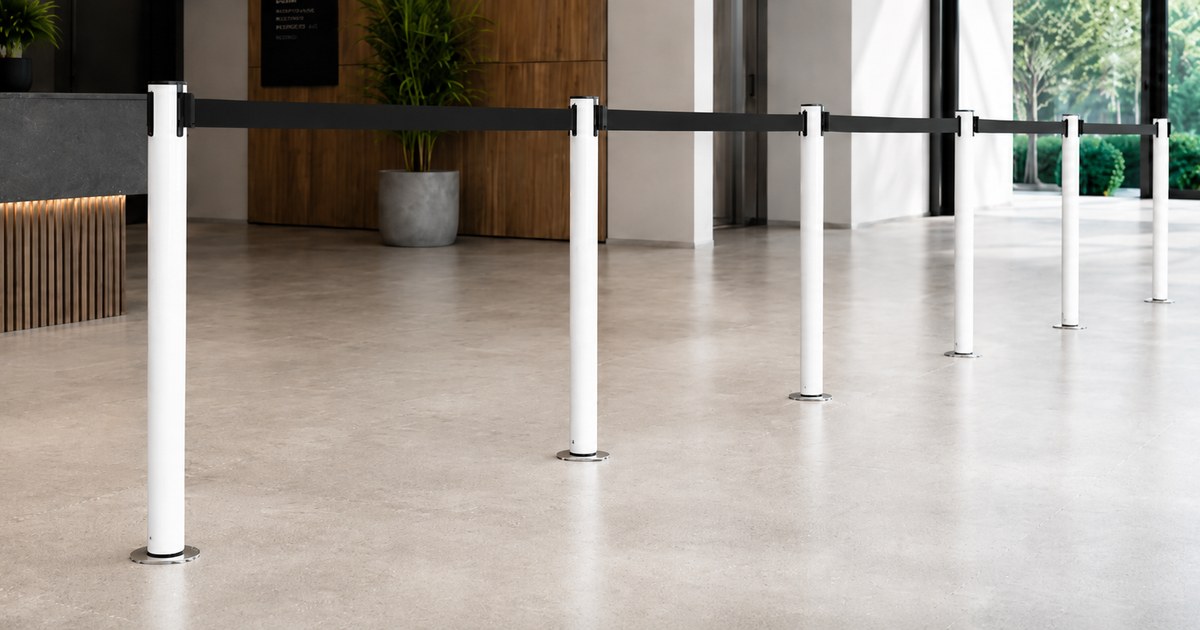 Tips & Advice Removable socketed barrier post: fixed anchoring, mobile freedom A recessed, discreet anchor you remove at will to free the floor: all about the removable socketed barrier post.
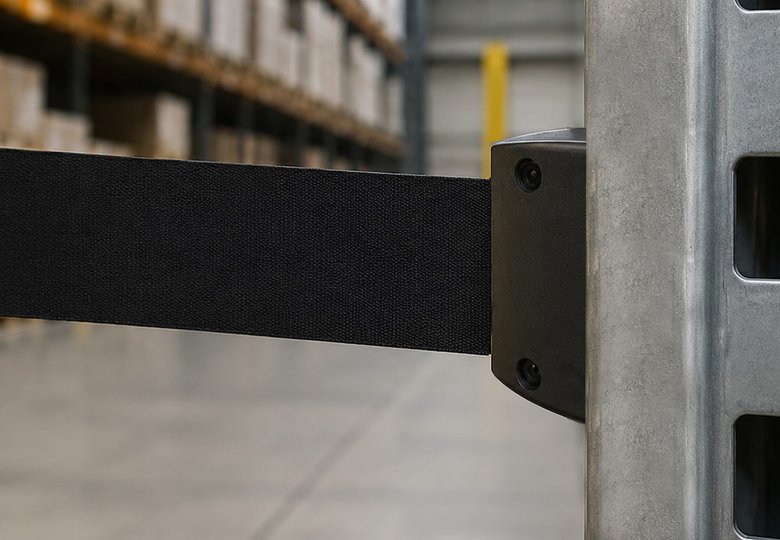 Tips & Advice Strap End: What is the Purpose of Each Finishing Type for Guidance Posts? Standard, security, magnetic or anti-panic: discover the purpose of each strap end for crowd control posts and why firefighters require…
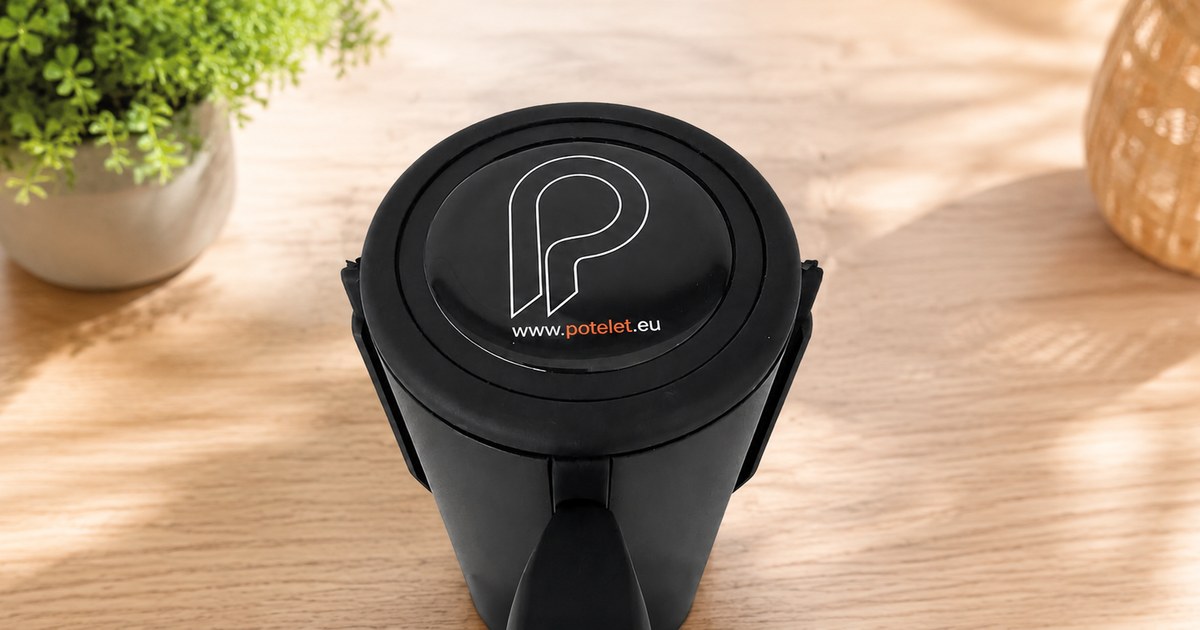 Tips & Advice Post Cap with Strap: Standard, White Label or Customised? Standard, white label or bespoke: the three cap finishes for Potelet® strap posts and how to choose yours.
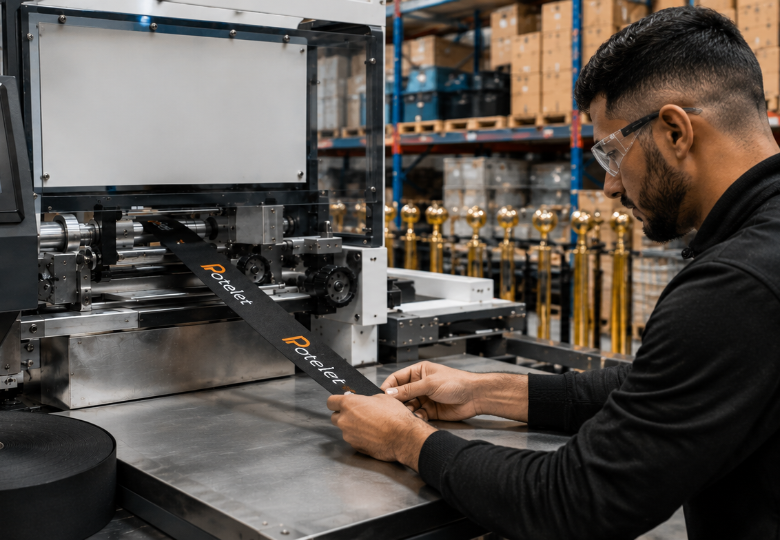 Tips & Advice For personalising the straps on your crowd control posts, insist on textile sublimation! Explanation. Personalise your crowd control post straps with textile sublimation for a professional and durable finish!
 Customisation How to personalise your post strap? Complete configurator guide Discover how to create your personalised strap in 7 steps: RAL colour, HD logo, front/back printing. Our free online configurator for your…